


Most Nigerian tech startups move fast and document late. The legal gaps that feel manageable in the first year become expensive, disruptive, and sometimes fatal to the business in the second and third. Here is the complete legal contract framework every tech startup should have in place and what happens when each one is missing.
 Founder disputes are one of the top reasons startups fail globally. In the Nigerian tech ecosystem, they follow a recognizable pattern: two or three people build something together, the business gains traction, and then a disagreement surfaces, over equity, over decision-making authority, over who owns the code, over what happens when one founder wants out. By the time it surfaces, there is no document that answers any of these questions, because the founders never wrote one down.
The same pattern plays out in different forms across the other legal relationships that define a tech startup. A developer builds the product, keeps the copyright in their own name because nobody thought to assign it to the company, and leaves. A contractor accesses proprietary systems, takes the client list, and starts a competing service. An investor provides capital on a term sheet that was never converted to a proper agreement, then disputes what they were promised. A user data breach attracts a Nigeria Data Protection Commission investigation because nobody built a compliant privacy policy or data processing framework.
None of these outcomes are unforeseeable. All of them are preventable with the right legal structures in place before the relationship begins, not after the dispute has arisen.
This article is a practical guide to the essential contracts every Nigerian tech startup should have in place. It explains what each contract does, what it must address, and critically, what the specific legal and commercial risk is when that contract does not exist. It also covers two frameworks that are specific to the Nigerian tech startup context and that most generic legal guides omit entirely: the Nigeria Startup Act 2022 and the Nigeria Data Protection Act 2023.
Why Contracts Are Legally Enforceable and What Makes Them So
Before examining what contracts a startup needs, it is worth briefly establishing what makes a contract enforceable under Nigerian law, because informal arrangements, verbal agreements, and WhatsApp confirmations are not, in most cases, the same as a binding contract.
A valid contract requires three essential elements: an offer; a definite proposal to be bound on specific terms; acceptance; an unqualified agreement to those exact terms; and consideration; something of value given by each party in exchange for the other’s promise. The parties must also have the intention to create legal relations and the capacity to contract.
The practical implication for startups is this: an understanding between founders, a handshake deal with an investor, or a verbal agreement with a developer may satisfy these elements in theory but be nearly impossible to prove in practice. The purpose of written contracts is to create a documented record that is specific, unambiguous, and enforceable in court without depending on anyone’s recollection of what was agreed.
One principle from Nigerian contract law worth noting: acceptance must correspond exactly with the offer. A response that modifies the terms, even in a minor way, is a counter-offer, not an acceptance, and extinguishes the original offer. Many startup negotiations involve multiple rounds of back-and-forth. The final, signed version of an agreement is the contract. Prior discussions and email exchanges are not.
Before the Contracts: The Nigeria Startup Act 2022
Most articles on startup contracts in Nigeria do not mention the Nigeria Startup Act 2022. This is a significant omission, because the Act offers material commercial incentives that are only available to startups that are correctly structured, and those incentives directly affect the value of getting your legal framework right from the start.
The Nigeria Startup Act 2022 provides startups that obtain the ‘startup label’ from the Secretariat with access to: pioneer status tax relief under the Industrial Development (Income Tax Relief) Act; immigration priority for foreign technical talent; preferential treatment in government procurement; and access to dedicated funding windows through NITDA and the Bank of Industry.
To qualify for the startup label, a business must be registered as a limited liability company under CAMA 2020 (not a sole proprietorship or partnership), must be less than ten years old, must be working toward developing or improving a product or process driven by technology or innovation, and must meet other criteria set out in the Act and its regulations. Businesses that do not register correctly — or that delay incorporation in favour of operating informally, cannot access these benefits retroactively.
The practical message is that the foundational legal structure, proper incorporation, correct shareholding documentation, appropriate IP assignment, is not just a legal requirement. It is the prerequisite for accessing commercial benefits that the Nigerian government has specifically created for the startup sector. Getting the structure right at the start is a competitive advantage, not a compliance burden.
The Essential Contracts
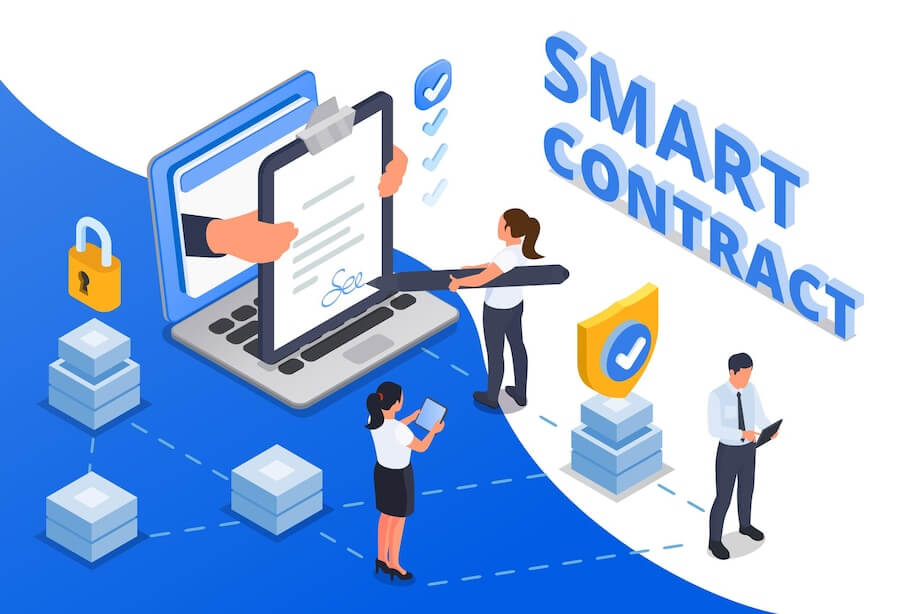
- The Founders’ Agreement
If a startup has more than one founder and does not have a Founders’ Agreement, it has an unresolved dispute waiting to happen. This is the most important document a multi-founder startup can have, and it is consistently the most neglected.
A Founders’ Agreement governs the relationship between co-founders before the company is fully operational and before the dynamics of success or failure have created competing interests. It addresses: equity ownership; who owns what percentage and on what basis; founder vesting; the schedule over which a founder earns their equity, so that a founder who leaves after six months does not retain the same stake as one who stays for five years; roles and responsibilities; decision-making thresholds; capital contributions; and what happens when a founder wants to exit or is forced out.
The vesting question is particularly important and frequently misunderstood. Without a vesting schedule, a founder who leaves the business in year one, having contributed little to its growth, may retain a 33% equity stake in perpetuity. That 33% will sit on the cap table, complicating future fundraising, diluting the working founders’ stakes, and potentially giving a departed founder blocking rights over material decisions. Investors conducting due diligence will spot this immediately and treat it as a red flag.
Under CAMA 2020, company law governs the relationship between shareholders and directors, but it does not resolve personal arrangements between founders. The Founders’ Agreement fills that gap. It operates alongside the company’s Articles of Association, and where the two interact, the relationship between them must be carefully managed by qualified legal counsel.
- The Intellectual Property Agreement
For a tech startup, the IP is often the entire business. The code, the platform architecture, the proprietary algorithm, the brand, the design system, the data model, these are what make the business defensible and valuable. The question of who owns them is therefore not academic.
Under Section 28(1) of the Nigerian Copyright Act 2022, copyright initially vests in the author of a work, the person who created it, subject to limited exceptions. This means that a developer who writes code for a startup owns that code unless a contract specifically transfers the copyright to the company. A designer who creates the UI owns the designs. A consultant who develops the technical architecture owns their work product. The startup owns nothing unless the ownership has been expressly transferred in writing.
The IP Agreement, or appropriate IP assignment provisions within employment, contractor, and consultant agreements, is the mechanism by which the company acquires ownership of everything created for it. It should cover: assignment of copyright in all work product created for the company; assignment of any inventions developed in the course of the engagement; a warranty that the creator owns what they are assigning and that it does not infringe any third-party rights; and confidentiality obligations over the company’s proprietary information.
A developer who builds a startup’s core platform and later disputes the company’s ownership of the code is in a strong legal position if there is no IP assignment agreement. Courts apply the copyright statute as written: the author owns the work unless a contract says otherwise. Due diligence by investors and acquirers will invariably identify any gap in the IP ownership chain and a gap means the company may not own the asset it is built on.
- Employment Agreements
Employment Agreements establish the legal terms of the relationship between the startup and its staff. For a tech startup, they serve three specific functions beyond defining compensation and working arrangements:
- IP assignment: the employment agreement should include express provisions assigning to the company all IP created by the employee in the course of their employment. Without this, an employee who writes code during working hours may have an argument for personal copyright ownership if the contract is silent.
- confidentiality: employees of a tech startup will routinely have access to source code, client data, business strategy, pricing models, and proprietary processes. The employment agreement should impose clear, enforceable confidentiality obligations covering what information is protected, what the employee can and cannot do with it, and what happens if they leave.
- post-employment restrictions: non-compete and non-solicitation clauses restrict a departing employee from immediately joining a competitor or soliciting the startup’s clients or colleagues. Nigerian courts will enforce these clauses where they are reasonable in scope, duration, and geography, but they will not imply them in the absence of a contract. A startup whose key developer leaves and immediately works for a direct competitor has limited recourse without an enforceable post-employment restriction.
- Contractor and Consultant Agreements

Many tech startups rely heavily on contractors and freelancers for development, design, marketing, and technical advisory. These relationships carry the same IP and confidentiality risks as employment, but without the statutory employment law framework that at least provides a baseline for disputes.
A Contractor Agreement must address: the scope of work; the basis and timing of payment; IP ownership and assignment of all work product; confidentiality obligations; the duration of the engagement; and termination provisions. It should also be explicit about the contractor’s status, confirming that they are an independent contractor, not an employee, to avoid the tax and employment law complications that arise when this relationship is misclassified.
The practical risk is that many Nigerian startups engage contractors informally, pay by transfer against an invoice, and treat the relationship as fully concluded when payment is made. It is not. Without an IP assignment in writing, the work product belongs to the contractor. Without a confidentiality agreement, the contractor has no contractual obligation to protect the information they accessed.
- Non-Disclosure Agreements
A Non-Disclosure Agreement creates contractual confidentiality obligations around specific disclosures to specific parties. For a startup, the most common contexts are: sharing business plans or financial projections with potential investors; sharing technical documentation with potential partners or acquirers; onboarding contractors or advisers who will have access to proprietary information; and early-stage recruitment, where candidates may learn about unannounced products or strategic direction.
An NDA should define confidential information precisely, specify the purpose for which it is being disclosed, restrict use and onward disclosure, identify the standard exceptions (publicly available information, independently developed information, information required to be disclosed by law), and specify the duration of the obligations. An NDA that defines confidential information as ‘all information shared between the parties’ is too broad to enforce reliably, precision in the definition is what makes the obligation enforceable.
The sequence matters as much as the document: an NDA must be signed before the information is disclosed. An NDA signed after a conversation has already happened protects nothing that was said before it was signed.
- Investment and Funding Agreements
As a startup grows and seeks external capital, the documentation of funding arrangements becomes one of the highest-stakes legal exercises the founders will undertake. The terms negotiated at this stage; equity percentage, investor rights, anti-dilution provisions, board representation, liquidation preferences, have consequences that play out for the entire life of the company.
The typical documentation sequence for an equity investment involves: a Term Sheet (a non-binding summary of the principal terms); a Share Subscription Agreement or Share Purchase Agreement (the binding investment agreement); and updated Articles of Association and a Shareholders’ Agreement reflecting the new ownership structure and investor rights. Each document in the sequence has specific protections for specific parties, and reviewing only one of them without understanding the others is a significant risk.
Two provisions that founders consistently underestimate at the term sheet stage: anti-dilution rights, which protect investors by adjusting their ownership percentage if future funding rounds are at a lower valuation, at the founders’ expense; and liquidation preferences, which determine the order and amount in which investors are paid in an exit or winding-up. A 2x liquidation preference means the investor receives twice their investment before founders see anything. These terms are negotiable before the term sheet is signed, not after.
- Shareholders’ Agreement
Where a company has multiple shareholders, including after any investment round, a Shareholders’ Agreement governs the relationship between them and supplements the company’s Articles of Association with provisions that may not be appropriate for a public constitutional document.
Key provisions for a tech startup’s Shareholders’ Agreement include: reserved matters; decisions that require shareholder or investor consent beyond the ordinary board majority; pre-emption rights; the right of existing shareholders to participate in new share issuances before outside parties; tag-along rights; which allow minority shareholders to sell alongside a majority shareholder in an exit transaction on the same terms; drag-along rights; which allow majority shareholders to compel minority shareholders to sell in an exit, preventing a small minority from blocking a deal; and deadlock provisions; mechanisms for resolving fundamental disagreements between shareholders that cannot be resolved through ordinary decision-making.
- Service Agreements and Digital Compliance Documents
For a startup that sells technology products or services to clients, the Service Agreement defines the commercial relationship: scope of services, fees, timelines, IP ownership in deliverables, warranties, limitations of liability, and termination. This is the document that governs what the startup has promised, what the client can expect, and what either party can do when things go wrong.
Beyond the client-facing Service Agreement, a tech startup operating a digital platform must have a suite of compliance documents: Terms of Use or Terms of Service; a Privacy Policy; and where relevant, a Cookie Policy and data processing agreements with third-party service providers.
These documents are not optional. The Nigeria Data Protection Act 2023; which superseded the Nigeria Data Protection Regulation 2019 and significantly strengthened Nigeria’s data protection framework, imposes obligations on any entity that collects, processes, or stores the personal data of Nigerian residents. For a tech startup, that means virtually every product that handles user accounts, payment details, location data, browsing behaviour, or any other information that relates to an identifiable individual.
The NDPA 2023 requires, among other obligations: a lawful basis for processing (most commonly, freely given, specific, informed user consent); a published, accessible privacy policy that accurately describes how data is collected, used, and shared; data subject rights including the right to access, correct, and delete personal data on request; and registration with the Nigeria Data Protection Commission (NDPC) for data controllers and processors above prescribed thresholds.
The seriousness of NDPA enforcement was demonstrated when the FCCPC imposed fines exceeding $220 million on Meta and WhatsApp in 2024 for violations of Nigerian consumer data rights. That figure involved a global technology company. The principle applies equally to a Nigerian fintech startup that processes user payment data without a compliant privacy framework. The NDPC has the power to investigate, fine, and require suspension of data processing operations, consequences that would be existential for an early-stage business.
Build Fast. But Build With a Foundation.

The Nigerian tech startup ecosystem is producing companies of genuine global relevance; in fintech, agri-tech, health-tech, logistics, and beyond. The best of them combine product velocity with legal discipline, because they understand that a business without a legal structure is a business that cannot defend what it has built.
The contracts described in this article are not bureaucratic hurdles. They are the instruments through which a startup defines its ownership, protects its IP, governs its investor relationships, and meets its regulatory obligations. Each one corresponds to a specific category of risk. Each one is significantly cheaper to put in place before a dispute arises than to litigate after one has.
The Nigeria Startup Act 2022 makes the case explicitly: the government has created a formal framework of incentives for structured, properly incorporated Nigerian tech startups. Accessing those incentives requires getting the legal foundation right. For a startup that aspires to raise capital, attract talent, and exit at a meaningful valuation, that foundation is not optional, it is the starting point.
The best time to put these contracts in place is before you need them. The second best time is now.
Written by: Otitoju Olaide
Junior Associate
Starr Attorneys
Building a Tech Startup in Nigeria?
Starr Attorneys advises Nigerian tech startups, founders, and investors on incorporation, founders’ agreements, IP protection, employment and contractor structuring, investment documentation, and NDPA compliance. We help you build the legal foundation your business needs to grow, raise capital, and protect what you have created.
+234 704 545 9409 | info@starrattorneys.co | starrattorneys.co
A startup that moves fast without legal structure does not move faster, it accumulates risk that slows it down later, at the worst possible moment. The founders who build sustainable tech companies are the ones who treat legal infrastructure the same way they treat technical infrastructure: as a foundation, not an afterthought.