


What is Alternative Dispute Resolution (ADR) in Nigeria?
Alternative Dispute Resolution (ADR) in Nigeria refers to a range of processes used to resolve disputes outside of the traditional court system. It offers a more efficient, cost-effective, and less adversarial way to settle conflicts compared to litigation.
Alternative Dispute Resolution methods can be particularly beneficial for businesses, as they can help to maintain relationships, avoid negative publicity, and preserve resources.
What is Dispute Resolution?
Dispute resolution is the process of resolving disputes between parties. It can involve negotiation, mediation, arbitration, or other Alternative Dispute Resolution (ADR) methods. Effective dispute resolution is essential for businesses to maintain positive relationships with clients, suppliers, and other stakeholders.
Business Dispute Meaning
A business dispute is any disagreement or conflict that arises between businesses or between a business and its stakeholders. These disputes can range from minor disagreements to major legal battles.
Business dispute examples include the following
- Contract disputes
- Partnership disputes
- Intellectual property disputes
- Employment disputes
- Environmental disputes
- Tax disputes
What is the Best Way to Resolve Business Disputes?
The best way to resolve a business dispute depends on the specific circumstances of the case. There is no universal approach. The most popular approach is going to court (litigation). However, Alternative Dispute Resolution (ADR) methods offer significant advantages over litigation, including:

- Cost-effectiveness: Alternative Dispute Resolution in Nigeria can be significantly less expensive than litigation, saving businesses time and money.
- Efficiency: Alternative Dispute Resolution Procedures are often faster than court proceedings, allowing businesses to resolve disputes more quickly.
- Confidentiality: Alternative Dispute Resolution proceedings are generally private and confidential, protecting the reputation of the parties involved.
- Preservation of Relationships: Alternative Dispute Resolution in Nigeria can help to maintain relationships between parties, which can be beneficial for ongoing business dealings.
- Flexibility: Alternative Dispute Resolution offers more flexibility in terms of procedures and outcomes compared to litigation.
What are the Five Methods of Alternative Dispute Resolution?
Different types of ADR offer more efficient, cost-effective, and less adversarial ways to resolve conflicts.
1. Mediation

Mediation, a cost-effective method for resolving business disputes, involves a neutral third party, the mediator, who acts as a facilitator between the parties. The mediator guides the disputing parties towards a mutually agreeable solution.
The mediator promotes open communication and encourages compromise to help parties identify their underlying interests and explore creative options for resolution.
This approach often preserves relationships and avoids the adversarial nature of litigation.
A typical mediation process involves:
- Preparation: The parties may exchange information and prepare for the mediation session.
- Opening Statement: The mediator introduces the parties and outlines the ground rules for the mediation.
- Information Exchange: The parties present their perspectives and interests.
- Negotiation: The mediator facilitates discussions between the parties to help them identify common ground and explore potential solutions.
- Settlement: If the parties reach an agreement, they will typically document the terms of the settlement in a written agreement.
2. Arbitration:

Arbitration is a more formal process than mediation, akin to a court system, involving a neutral third party known as an arbitrator.
The arbitrator acts as a judge, hearing evidence and arguments from both sides before issuing a binding decision.
While arbitration can be more structured than mediation, it is still generally less expensive and time-consuming than litigation.
The Arbitration and Mediation Act 2023 is a significant piece of legislation in Nigeria that provides a legal framework for the various methods of ADR. It outlines the procedures and rules for arbitration and mediation in the country. The Act aims to promote the use of ADR as an efficient and effective means of resolving disputes.
A typical arbitration process involves:
- Appointment of Arbitrator: The parties may agree on an arbitrator or allow an arbitration institution to appoint one.
- Pre-Hearing Conference: The arbitrator may hold a pre-hearing conference to discuss the issues in dispute and set a schedule for the arbitration.
- Hearings: The parties present their evidence and arguments to the arbitrator.
- Award: The arbitrator issues a written award that is legally binding on the parties.
Is there any difference between Arbitration and Mediation?
While arbitration and mediation share some similarities, there are key differences between these two approaches.
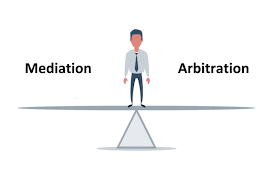
Arbitration: The following are the key characteristics of an arbitration process:
- Binding Decision: The arbitrator has the authority to make a binding decision on the dispute.
- Formal Process: Arbitration proceedings are more formal than mediation, resembling a court trial.
- Neutral Third Party: The arbitrator acts as a neutral third party, hearing evidence and arguments from both sides.
- Limited Appeal: There are limited grounds for appealing an arbitration award.
Mediation: The following are the key characteristics of a mediation process:
- Non-Binding Decision: The mediator does not have the authority to make a binding decision.
- Facilitative Role: The mediator acts as a facilitator, helping the parties reach a mutually agreed-upon solution.
- Flexibility: Mediation offers more flexibility in terms of procedures and outcomes.
- Preservation of Relationships: Mediation can help to preserve relationships between the parties.
Key Differences:
- Binding Nature: Arbitration decisions are binding, while mediation outcomes are voluntary.
- Formality: Arbitration is more formal than mediation, resembling a court trial.
- Role of the Third Party: In arbitration, the third party (arbitrator) makes a decision. In mediation, the third party (mediator) facilitates communication.
- Flexibility: Mediation offers more flexibility in terms of procedures and outcomes.
The choice between arbitration and mediation depends on the specific circumstances of the dispute, the goals of the parties, and the desired level of formality and control. In some cases, a combination of arbitration and mediation may be appropriate, such as mediation followed by arbitration if the parties are unable to reach a settlement through mediation.
3. Negotiation

Negotiation involves the parties directly discussing and resolving their dispute without the involvement of a third party.
This approach can be particularly effective for resolving minor disagreements or when the parties have a strong relationship.
However, negotiation can be challenging, especially when emotions are high or the parties have conflicting interests.
Types of Negotiation
Several types of negotiation strategies can be used to resolve disputes:
- Distributive negotiation: A competitive approach where parties aim to maximize their gains and minimize their losses.
- Integrative negotiation: A collaborative approach where parties work together to find mutually beneficial solutions.
- Principled negotiation: A collaborative approach based on four principles: people, interests, options, and criteria.
4. Conciliation

Conciliation involves a neutral third party who provides advice and guidance to the parties. The conciliator does not have the authority to make binding decisions, but they can help the parties identify areas of agreement and disagreement. Conciliation can be a useful tool for resolving disputes when the parties are unable to reach an agreement on their own.
5. Mini-Trial:
A mini-trial is a simplified version of a court trial, where parties present their cases to a neutral third party (mini-trial judge). The judge then provides a non-binding opinion, which can help the parties assess the potential outcome of litigation and encourage settlement.
Do you need Lawyers for Business Disputes?

This question practically answers itself. Experienced business lawyers can help you navigate the complexities of dispute resolution and protect your business interests.
They can provide guidance on choosing the appropriate ADR method, representing you in negotiations or arbitration, and advocating for your rights in court if necessary.
Advantages of ADR
- Cost-effective: ADR can be significantly less expensive than litigation.
- Efficient: ADR procedures can be faster than court proceedings.
- Confidential: ADR proceedings are generally private and confidential.
- Preservation of Relationships: ADR can help to maintain relationships between parties.
- Flexibility: ADR offers more flexibility in terms of procedures and outcomes.
By understanding the various ADR options available and seeking the guidance of a qualified business lawyer, businesses can effectively resolve disputes and protect their interests.